
A Guide to German Christmas Market Food and Drink unveils the magical culinary traditions that transform Germany’s winter landscape into enchanting wonderlands of flavor and festivity. These seasonal markets, dating back to the Late Middle Ages, have evolved into spectacular celebrations where food and drink play central roles in creating unforgettable holiday memories.
Exploring the Top 7 Must-Try German Christmas Market Foods and Traditional Treats reveals centuries of culinary heritage, from steaming cups of mulled wine to delicate gingerbread cookies that have been perfected over generations. The aromatic spices of glühwein mingle with the sweet scent of Traditional German Christmas Pastries and Baked Goods, creating sensory experiences that capture the essence of German holiday spirit.
Identifying the Best German Christmas Markets for Food Lovers becomes essential for maximizing culinary adventures, whether wandering through Nuremberg’s historic Christkindlesmarkt or experiencing Cologne’s magnificent tree-lined market. Each location offers unique regional specialties and local favorites that reflect Germany’s diverse culinary landscape.
Indulging in German Christmas Market Desserts and Sweet Treats provides delightful moments of pure joy, while exploring Hot Chocolate and Non-Alcoholic Options ensures everyone can participate in the festive beverage culture. Traditional German Christmas Sausages and Meat Dishes offer hearty sustenance against winter’s chill, combining practical nutrition with authentic flavors that have sustained German families through countless holiday seasons.
This comprehensive guide navigates the delicious complexities of German Christmas market cuisine, ensuring visitors can fully appreciate both the culinary artistry and cultural significance behind every bite and sip.
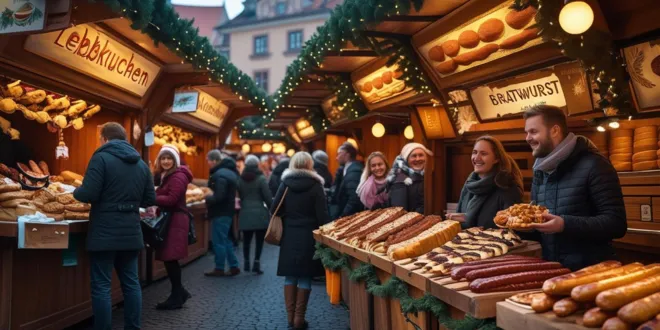
A Guide to German Christmas Market Food and Drink
A Guide to German Christmas Market Food and Drink unveils the enchanting culinary traditions that transform Germany’s winter markets into magical sensory experiences. These seasonal celebrations feature aromatic glühwein, traditional sausages, gingerbread cookies, and roasted chestnuts that have delighted visitors for centuries.
From Nuremberg’s world-famous lebkuchen to Dresden’s legendary stollen, each region offers distinctive specialties that reflect local ingredients and cultural heritage. Modern markets also cater to diverse dietary needs with vegan and gluten-free options, ensuring inclusive enjoyment for all visitors seeking authentic German holiday flavors and festive atmosphere.
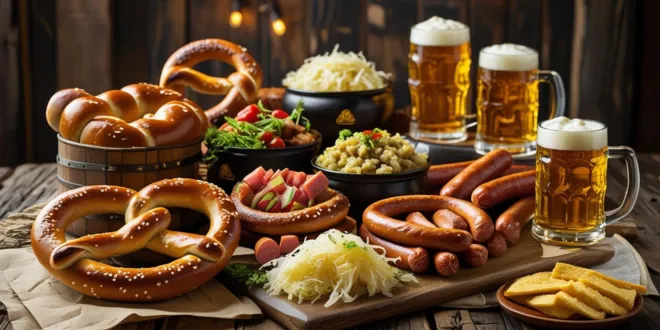
Top 7 Must-Try German Christmas Market Foods and Traditional
- Glühwein (Mulled Wine)
- Bratwurst
- Lebkuchen (Gingerbread Cookies)
- Roasted Chestnuts
- Pretzels (Brezeln)
- Reibekuchen (Potato Pancakes)
- Gebrannte Mandeln (Candied Almonds)
Glühwein (Mulled Wine)
Warm, spiced red wine infused with cinnamon, cloves, and citrus, served in traditional ceramic mugs that visitors often keep as souvenirs from Christmas markets throughout Germany
Bratwurst
Grilled German sausages served hot with mustard and fresh bread, a staple at every Christmas market featuring regional variations like Nuremberg’s small, thin sausages
Lebkuchen (Gingerbread Cookies)
Soft, spiced honey cookies traditionally made in Nuremberg, often decorated with icing and sometimes filled with marzipan for extra indulgence
Roasted Chestnuts
Fresh chestnuts roasted over open fires, sold in paper cones and enjoyed as warming street food while wandering through festive market stalls
Pretzels (Brezeln)
Large, soft Bavarian pretzels sprinkled with coarse salt, perfect for pairing with glühwein and providing hearty sustenance during cold winter evenings
Reibekuchen (Potato Pancakes)
Crispy fried potato pancakes served hot with applesauce or sour cream, offering satisfying comfort food at outdoor Christmas market stalls
Gebrannte Mandeln (Candied Almonds)
Roasted almonds coated in caramelized sugar, creating sweet, crunchy treats that provide quick energy while exploring market grounds
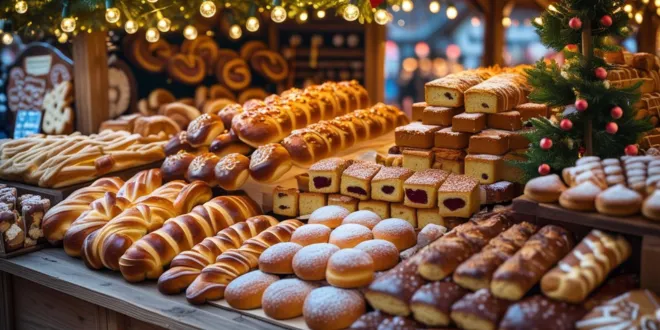
Treats Traditional German Christmas Pastries and Baked Goods
- Stollen
- Lebkuchen
- Springerle
- Zimtsterne
- Vanillekipferl
- Christstollen
- Pfeffernüsse
- Spekulatius
- Kletzenbrot
- Printen
Best German Christmas Markets for Food Lovers
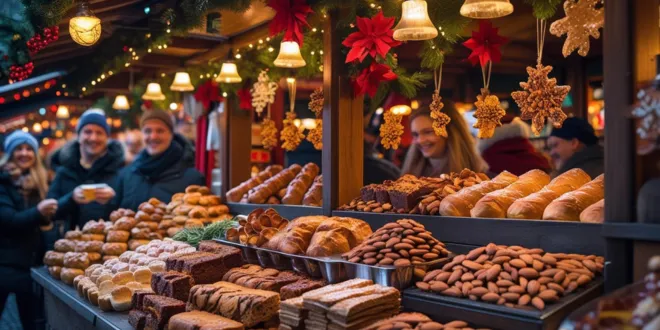
Germany’s Christmas markets offer unparalleled culinary experiences that delight food enthusiasts from around the world. The Nuremberg Christkindlesmarkt stands as the most famous, renowned for its traditional sausages, gingerbread cookies, and mulled wine served in decorative ceramic mugs. Dresden’s Striezelmarkt, one of Europe’s oldest, features the world-famous Stollen fruitcake and authentic Saxon specialties.
Munich’s Christkindlmarkt at Marienplatz combines Bavarian hospitality with hearty pretzels, roasted almonds, and local beers. Cologne’s market along the Rhine River offers exquisite regional wines and traditional Rhineland dishes. Berlin’s Gendarmenmarkt provides sophisticated culinary experiences with international influences alongside classic German treats.
Hamburg’s market near the Rathaus showcases Northern German seafood specialties and maritime-inspired delicacies. Rothenburg’s medieval market transports visitors back in time with authentic medieval recipes and traditional baked goods. Each market features unique regional specialties, from Aachen’s Printen cookies to Augsburg’s delicate pastries, ensuring food lovers discover new favorites while experiencing Germany’s rich culinary heritage through centuries-old Christmas traditions.
German Christmas Market Desserts and Sweet Treats
German Christmas markets showcase an enchanting array of desserts and sweet treats that capture the essence of holiday magic. Traditional favorites include warm apple strudel with vanilla sauce, delicate gingerbread cookies (Lebkuchen) from Nuremberg, and Dresden’s famous Stollen fruitcake.
Visitors delight in roasted chestnuts, candied almonds, and marzipan specialties shaped like fruits and animals. Festive pastries such as Vanillekipferl crescents and Zimtsterne cinnamon stars fill the air with irresistible aromas. Hot chocolate and specialty teas provide warming accompaniments to these sweet indulgences.
Each region offers unique variations, from Aachen’s Printen cookies to Rothenburg’s iconic Schneeballen snowball pastries, creating memorable culinary experiences that define German Christmas traditions.
The Most Popular German Christmas Market Desserts and Sweet Treats
- Lebkuchen (Gingerbread Cookies)
- Stollen (Fruit Bread)
- Glühwein (Mulled Wine)
- Roasted Chestnuts
- Pretzels (Brezeln)
- Reibekuchen (Potato Pancakes)
- Gebrannte Mandeln (Candied Almonds)
Lebkuchen (Gingerbread Cookies)
Soft, spiced honey cookies from Nuremberg, often decorated with icing and considered Germany’s most famous Christmas sweet treat
Stollen (Fruit Bread)
Dresden’s legendary Christmas fruitcake filled with dried fruits, nuts, and marzipan, traditionally dusted with powdered sugar during Advent season
Glühwein (Mulled Wine)
Warm, spiced red wine infused with cinnamon, cloves, and citrus, served in decorative mugs that enhance the festive Christmas market atmosphere
Roasted Chestnuts
Fresh chestnuts roasted over open fires, sold in paper cones and providing warming street food perfect for cold winter evenings
Pretzels (Brezeln)
Large, soft Bavarian pretzels sprinkled with coarse salt, offering hearty sustenance and pairing perfectly with glühwein at outdoor markets
Reibekuchen (Potato Pancakes)
Crispy fried potato pancakes served hot with applesauce or sour cream, representing satisfying comfort food at Christmas market stalls
Gebrannte Mandeln (Candied Almonds)
Roasted almonds coated in caramelized sugar, creating sweet, crunchy treats that provide quick energy while exploring festive market grounds
Vegan and Gluten-Free German Christmas Market Desserts and Sweet Treats
Modern German Christmas markets increasingly cater to dietary restrictions with delicious vegan and gluten-free options. Vegan alternatives include dairy-free glühwein made with plant-based wines, coconut milk hot chocolate, and vegan gingerbread cookies using almond flour and maple syrup.
Gluten-free versions feature chestnut flour stollen, rice flour lebkuchen, and quinoa-based Christmas cookies. Many vendors now clearly label allergen-free options, ensuring inclusive enjoyment for all visitors. These thoughtful adaptations maintain traditional flavors while accommodating contemporary dietary needs, allowing everyone to participate fully in Germany’s beloved Christmas market culinary traditions.
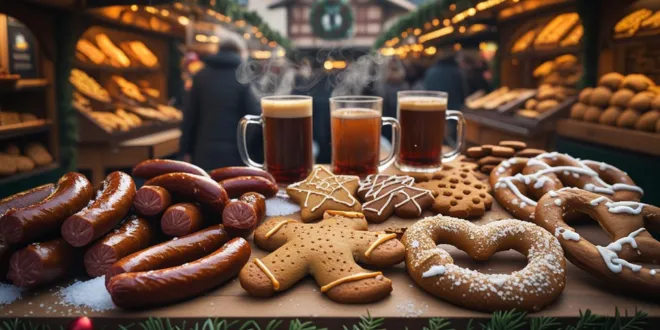
Hot Chocolate and Non-Alcoholic Options
Traditional German Christmas Sausages and Meat Dishes
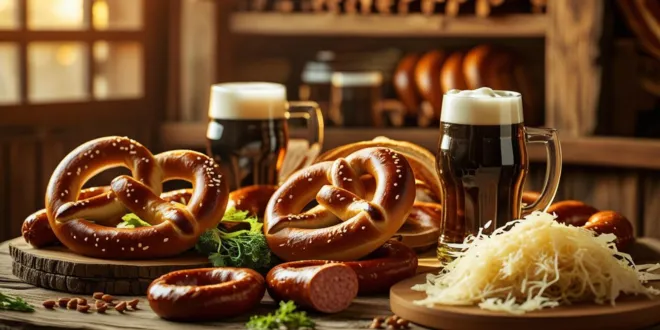
Traditional German Christmas sausages and meat dishes provide hearty, warming sustenance perfect for cold winter evenings at Christmas markets. Famous varieties include Nuremberg’s small, thin bratwurst served with sauerkraut and mustard, Bavarian Weisswurst white sausages enjoyed with sweet mustard and pretzels, and Thuringian grilled bratwurst known for their distinctive flavor. Hearty options feature roasted goose with apple stuffing, traditional sauerbraten pot roast, and crispy pork knuckle.
These protein-rich dishes offer essential energy and warmth, often accompanied by potato dumplings, red cabbage, or fresh bread. Many recipes date back centuries, preserving authentic flavors that define German Christmas culinary traditions and bring families together around festive dinner tables.
Where to Find Authentic Traditional German Christmas Sausages and Meat Dishes
Authentic traditional German Christmas sausages and meat dishes are best found at established Christmas markets in major cities like Nuremberg, Dresden, Munich, and Cologne. Family-run market stalls with generations of culinary heritage offer the most genuine experiences.
Traditional butcher shops and local restaurants also serve authentic preparations. Look for vendors using time-honored recipes and regional ingredients. Many markets feature award-winning local producers who maintain strict quality standards. University districts and historic town centers often house hidden gems serving authentic German Christmas cuisine that rivals famous market offerings.
Most Popular Traditional German Christmas Sausages and Meat Dishes
- Nuremberg Bratwurst
- Thuringian Bratwurst
- Weisswurst
- Roasted Goose (Weihnachtsgans)
- Sauerbraten
- Schweinshaxe
- Leberkäse
Conclusion
A Guide to German Christmas Market Food and Drink has revealed the extraordinary culinary treasures that make Germany’s holiday markets truly magical destinations for food enthusiasts worldwide. From the Top 7 Must-Try German Christmas Market Foods and Traditional Treats that embody centuries of seasonal tradition to the delicate artistry found in Traditional German Christmas Pastries and Baked Goods, these markets offer unparalleled sensory experiences that celebrate both heritage and community.
Discovering the Best German Christmas Markets for Food Lovers ensures you’ll encounter authentic regional specialties, from Nuremberg’s famous bratwurst to Dresden’s stollen cake, each telling unique cultural stories through flavor and preparation. The indulgent German Christmas Market Desserts and Sweet Treats provide moments of pure joy, while exploring Hot Chocolate and Non-Alcoholic Options guarantees inclusive enjoyment for visitors of all ages and dietary preferences.
Traditional German Christmas Sausages and Meat Dishes anchor these culinary celebrations with hearty, satisfying flavors that have warmed families through countless winters. Whether you’re savoring perfectly spiced glühwein, biting into a fresh-baked pretzel, or discovering new favorite treats, these markets create memories that extend far beyond taste buds.
As you plan your German Christmas market journey, remember that each bite and sip connects you to generations of tradition, making your holiday experience both deliciously personal and culturally enriching through Germany’s most beloved seasonal culinary celebrations.
Frequently Asked Questions
1. What are the must-try foods at German Christmas markets?
Essential foods include glühwein (mulled wine), bratwurst, gingerbread cookies, roasted chestnuts, and traditional pastries like stollen. These iconic treats represent centuries of German Christmas culinary traditions and are available at every major market throughout Germany during the holiday season.
2. Are there vegetarian options available at German Christmas markets?
Yes, most German Christmas markets offer vegetarian options including cheese-filled pretzels, potato pancakes, vegetable soups, and various pastries. Many vendors now cater to dietary restrictions, providing plant-based alternatives to traditional meat dishes while maintaining authentic flavors.
3. What is the best time to visit German Christmas markets for food?
Late November through December offers optimal experiences, with peak season from December 1-23. Early evening visits (5-8 PM) provide the most atmospheric dining experiences when markets are illuminated, and food vendors are fully operational with fresh supplies.
4. Which German Christmas markets are best for food lovers?
Top culinary destinations include Nuremberg’s Christkindlesmarkt for traditional sausages and gingerbread, Dresden’s Striezelmarkt for famous stollen, Munich’s Marienplatz market for Bavarian specialties, and Cologne’s market for regional wines and Rhineland cuisine.
5. Can children enjoy German Christmas market food and drinks?
Absolutely! Children can enjoy non-alcoholic glühwein, hot chocolate, roasted chestnuts, pretzels, and various pastries. Many markets offer Kinderpunsch (children’s punch) and maintain family-friendly atmospheres with special menu items designed specifically for younger visitors.
6. What are traditional German Christmas market drinks besides glühwein?
Traditional alternatives include hot chocolate, herbal teas, apple cider, Eierpunsch (egg punch), and various non-alcoholic versions of mulled wine. Regional specialties vary by location, with some markets offering local beers, schnapps, and seasonal fruit punches for diverse beverage experiences.
7. Are German Christmas market foods suitable for people with allergies?
Many vendors accommodate allergies by providing ingredient lists and gluten-free options. Common allergens like nuts in traditional baked goods are clearly labeled, and markets increasingly offer dairy-free, nut-free, and gluten-free alternatives to ensure inclusive dining experiences for all visitors.
8. What makes German Christmas market food different from regular German cuisine?
Christmas market food emphasizes seasonal ingredients, warming spices, and portable preparations perfect for outdoor consumption. Special holiday recipes, festive presentations, and traditional cooking methods create unique culinary experiences that celebrate winter traditions and community gathering during the Advent season.
9. How can I find authentic German Christmas market food experiences?
Seek out family-run stalls, traditional bakeries, and vendors using centuries-old recipes. Authentic experiences often feature handmade items, regional specialties, and vendors who can explain the history behind their products, ensuring genuine connections to German Christmas culinary heritage.
10. What are the most popular German Christmas pastries and desserts?
Popular treats include stollen fruitcake, lebkuchen gingerbread cookies, vanillekipferl crescents, zimtsterne cinnamon stars, and schneeballen snowball pastries. Each region offers distinctive variations, with Nuremberg’s gingerbread and Dresden’s stollen being particularly famous throughout Germany and internationally.